

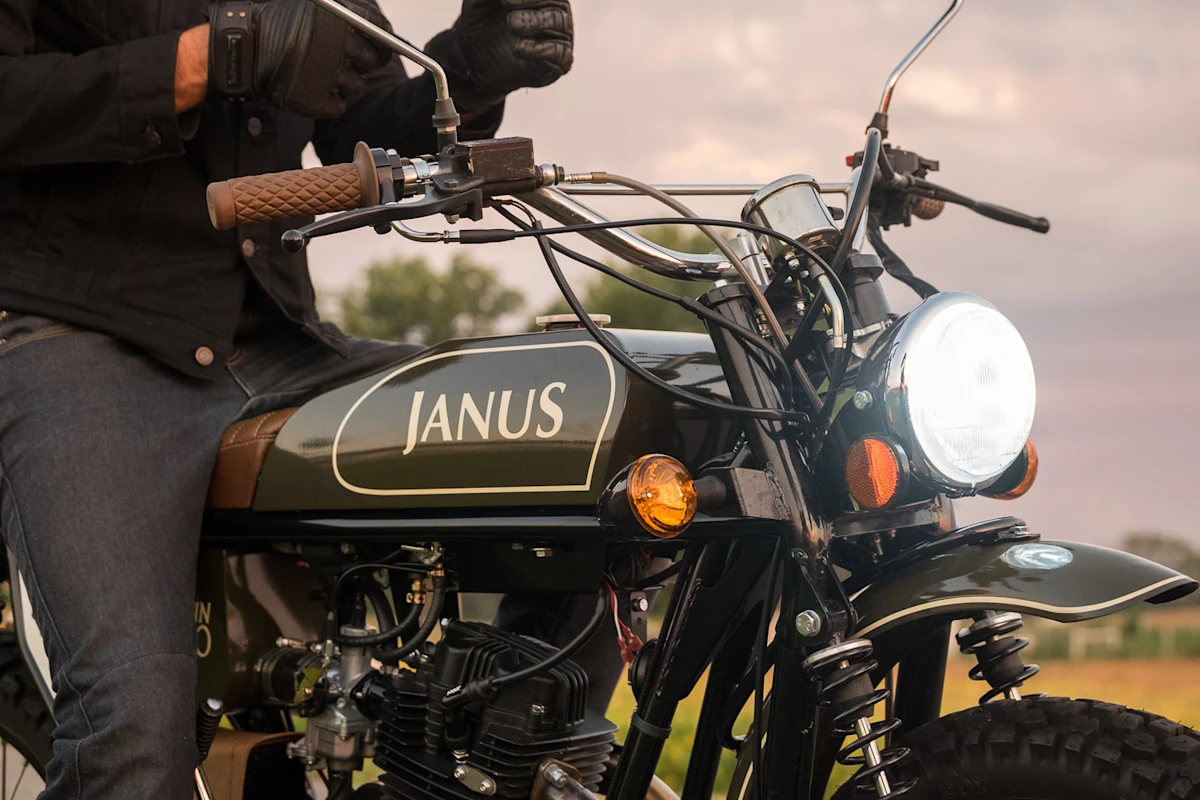
The smell of old oil and gasoline. The satisfying heft of a cast-iron engine case. The hunt for a rare, NOS (New Old Stock) part that’s been out of production for fifty years. For the classic bike enthusiast, this is the romance of the restoration. But it’s also, let’s be honest, a massive pain.
What if you could keep the soul of a vintage machine but sidestep the most frustrating parts of the process? That’s the promise—and now, the reality—of blending old-school aesthetics with new-school manufacturing. We’re talking about building or restoring a vintage motorcycle using modern 3D-printed and CNC-machined components.
Why Go Digital for an Analog Machine?
Here’s the deal: the traditional restoration path is blocked by scarcity. Gaskets, brackets, lever perches, even entire carburetor bodies—they simply don’t exist anymore. You could spend months scouring swap meets and eBay, paying a premium for worn-out parts. Or, you can make them.
Not with a forge and anvil, but with a 3D printer and a desktop CNC machine. This isn’t about creating a replica bike from scratch (though you could). It’s about breathing new life into a classic frame using digitally fabricated replacement parts and upgrades.
The benefits are pretty compelling:
- Unbreakable Supply Chain: Need a part? Print it or machine it. The file is the spare.
- Material Innovation: That 3D-printed air intake can be in high-temp resin, and the CNC’d rear sets can be from aerospace aluminum.
- Customization, Made Easy: Always wanted a custom dash that fits a modern gauge? Design it once, make it forever.
The Toolkit for a Hybrid Build
So, what are we actually working with? Let’s break down the two key technologies.
3D Printing: The Rapid Prototyper (and Final Part Maker)
Think of 3D printing as your digital clay. It’s fantastic for complex, organic shapes that would be a nightmare to machine. For our vintage bike project, it shines for non-structural or low-stress components.
Perfect uses: Cable guides, switch housings, dash panels, tool tray inserts, airbox snorkels, and even patterns for casting metal parts. With materials like carbon-fiber infused nylon or tough resins, these parts are far from toys. They’re durable, heat-resistant, and look… well, they look professional.
CNC Machining: The Digital Craftsman
If 3D printing adds, CNC machining subtracts. It’s a computer-controlled router or mill that carves a solid block of material into a precise part. This is where you get your load-bearing, high-precision motorcycle components.
We’re talking about triple trees, engine mounting plates, brake pedal linkages, and custom axle spacers. The finish is impeccable—think billet aluminum, but designed by you, in your garage. The tactile feedback from a CNC-machined part, honestly, it just feels right on a vintage build.
| Technology | Best For | Material Examples | Vintage Build Use Case |
| 3D Printing (FDM/FFF) | Complex shapes, prototypes, enclosures | PETG, Nylon, ASA | Air cleaner housings, wire looms, badge replicas |
| 3D Printing (Resin/SLA) | High-detail, smooth-finish parts | Tough, Heat-Resin Resins | Instrument faces, intricate badges, switch knobs |
| CNC Machining | High-strength, precision structural parts | 6061 Aluminum, Brass, Steel | Footpeg mounts, chain tensioners, custom brackets |
The Real-World Workflow: From Sketch to Sprocket
How does this actually come together? It’s a dance between the physical and the digital.
First, you need a model. For a broken part, that often means 3D scanning it—a smartphone app can sometimes get you close, but a proper scanner is better. For a new design, you jump straight into CAD (Computer-Aided Design) software. There’s a learning curve, sure, but the online communities for programs like Fusion 360 are incredibly supportive.
Then, you prototype. Print a plastic version of that aluminum bracket. Test the fit. Does it clear the frame when the suspension compresses? Tweak the digital file—a slight change here, a reinforcement there—and try again. This iterative process is the secret sauce. It turns “hope it fits” into “know it fits.”
Finally, production. For the final part, you send the perfected file to your 3D printer with the correct material, or you fixture a block of aluminum in the CNC and let it do its meticulous work. The sound of a CNC machine carving a part you designed… it’s a modern symphony for gearheads.
Navigating the Pitfalls & Mindset Shift
This isn’t a total utopia, of course. You have to know the limits. A 3D-printed piston is a terrible idea. A CNC-machined frame from mild steel without proper heat treatment? Also bad. The key is understanding material properties and stress points.
The bigger shift, though, is philosophical. Purists might balk. “It’s not original!” And they’re right—it’s not. But for many bikes, the choice isn’t between an original part and a printed one. It’s between a printed one and no bike at all. This technology is preserving motorcycles that would otherwise be permanent garage art.
Plus, it allows for subtle improvements. That vintage brake lever pivot can be redesigned with a proper bushing surface. A brittle original plastic part can be re-made in a material that won’t shatter. You’re not just copying; you’re thoughtfully evolving.
The Finish Line: A Machine with Two Souls
At the end of the build, what you have is something unique. A motorcycle that starts with a kick (or an electric leg, maybe also printed) and rumbles with the character of its era. But look closer. The clean lines aren’t interrupted by a cobbled-together bracket. The controls operate with a precision the original engineers might have dreamed of.
It’s a hybrid. A testament to the timeless design of the past, enabled by the accessible technology of the present. You’ve bridged the gap. The journey itself changes—less frantic searching, more focused creation. And the result? It’s still a vintage motorcycle. It just has a few very modern, very personal fingerprints on it.
That, in the end, is what any custom build is about. The story. And now, the story includes lines of code and layers of filament, right alongside the grease and the glory.


